
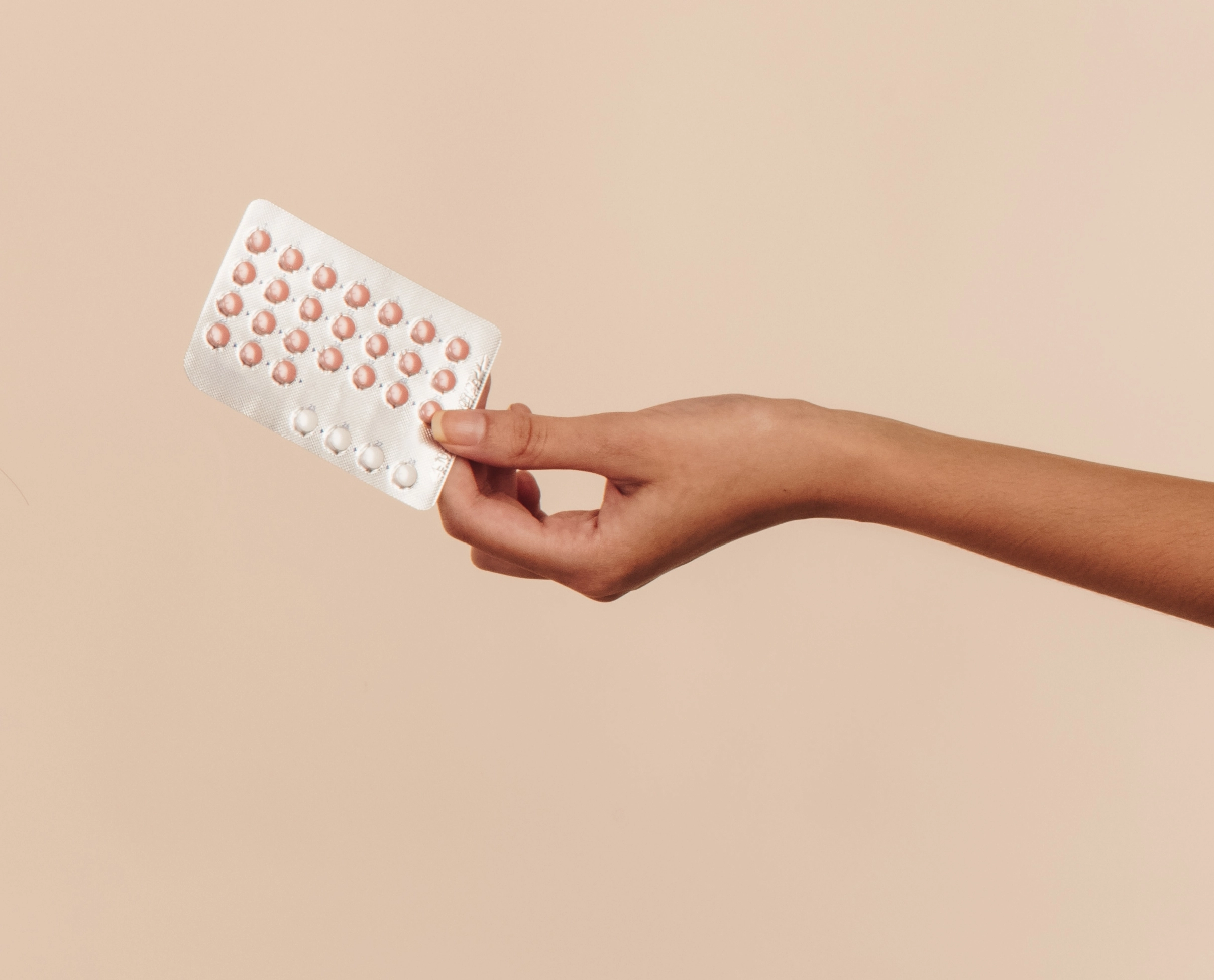
Combined Oral Contraceptive Pill
A daily dose of pregnancy prevention, with skin and period perks on the side.
Gets a B+ in pregnancy prevention
The cheat Sheet
COMMON BRAND NAMES
Diane-35, Yaz, Yasmin, Levlen, Microgynon and many more.
PREVENTING PREGNANCY
99% with perfect use, 93% effective with typical use.
STARTING ON THIS METHOD
You’ll need a prescription from your GP or gynaecologist to start the combined pill, which you can begin on the first day of your period for immediate protection or any other day with 7 days of backup contraception.
LAST FOR
The combined pill is taken daily at the same time and only works as long as you take it consistently. There’s no lasting protection if you stop.
HORMONES
Yes, contains synthetic hormones - oestrogen and progestogen.
STIS
No protection against STIs.
PERIODS
Your period may change, some people have lighter, more regular bleeding, while others may experience spotting or heavier flow, especially at first.
ACNE/SKIN
Can improve and/or worsen your acne/skin.
MOOD/EMOTIONS
May help or affect your mood, depending on how your body reacts to the hormones.
PREGNANCY AFTER REMOVAL
Fertility usually returns quickly after stopping the pill, but for some people, it can take a few months for their cycle to regulate.
VISIBILITY
It’s a pill that you swallow. No one can tell you're using it unless you choose to share.
FINANCIAL INVESTMENT
Available by prescription in Australia, and may be partly covered by Medicare.
The combined oral contraceptive pill is a teeny tiny tablet you take at the same time every day, that packs a hormonal punch. It’s the OG of hormonal contraception and often just called “the pill.” The combined pill contains two synthetic hormones: ethinylestradiol (a form of estrogen) and a progestogen (like levonorgestrel or norethisterone, depending on the brand). These hormones are absorbed into the bloodstream through your digestive system when you swallow the pill.
Most pill packs come with 28 pills. There are typically two types:
21 active pills (the ones doing all the hormonal heavy lifting), followed by 7 sugar pills.
24 active pills (the ones doing all the hormonal heavy lifting), followed by 4 sugar pills.
The sugar pills are placebos (meaning they don’t do anything, their role is purely for the act of taking something to remind you what day you are up to. They also pills trigger a ‘withdrawal bleed’, which feels like a period, but is your body responding to the drop in hormones, not a natural menstrual cycle.
Some people choose to skip the sugar pills and start a new pack straight away to avoid bleeding altogether. Beach holiday in Fiji coming up? Skip period thank you! Safe? You betcha!
Even though it’s a tiny tablet (like we’re talking, if you dropped it on the floor, you’d need a search party to find it), it sets off big changes in your body to prevent pregnancy, working on your ovaries, cervix, and uterus like a well-organised security team.
These hormones prevent pregnancy in three main ways:
1. Thickens cervical mucus
Imagine the cervix is the entrance to a fancy garden party, and sperm are uninvited guests. Normally, the gate (cervical mucus) is open with a smooth path. But under the influence of progestogen, that path turns into a pit of quicksand; thick, dense, and nearly impossible to cross. Most sperm get stuck before they even make it to the gate. Poor things, the party is popping off!
2. Thins the uterine lining
The uterus usually fluffs up its lining like a cozy bed, getting ready to welcome a fertilised egg. The hormones in the combined pill strip the bed and take away the welcome mat, making it much harder for anything to settle in and stay. Because guess what, this hotel has no vacancies!
3. Stops ovulation
Think of your ovaries like a vending machine that releases one egg (snack) each month. The hormones in the combined pill switch off the machine, so no egg gets released. No egg means nothing for sperm to fertilise; therefore no pregnancy!
- People with hormone-related conditions like PMS, PMDD, PCOS, fibroids or endometriosis, who might find some sweet relief from symptoms.
- The checklist people who get a quiet thrill from ticking off “take pill” every day.
- Folks who want the freedom to control their cycle (aka skip that monthly bleed).
- It doesn’t protect against STIs, so consider pairing it with condoms if that’s a concern.
- There can be a bit of trial and error to find the brand that suits your body best, and that’s very normal. Patience can be required!
- Missing pills matter, even one or two can reduce effectiveness, so set that reminder and sync it with your morning or nightly routine!

The not-so-fun stuff
Common side effects of the pill
Let’s be honest. No contraceptive method is perfect. And when it comes to hormonal contraception, side effects can feel like a bit of a lucky dip. What one person barely notices, another might really struggle with. Everyone responds differently - physically, emotionally, mentally and every response is valid.
We want you to have the full picture so you can make a decision that works for your body, not just what looks good on paper.
So here it is: the good, the meh, and the stuff worth keeping an eye on.
Most people adjust after 2-3 months of using the combined pill, but here are some side effects that tend to show up early on:
- Nausea (feeling sick)
- Headaches
- Breast tenderness
- Mood changes
- Bloating
- Spotting between periods
- Skin changes, including acne
- Low libido/decreased sex drive
We love clinical stats. But we also love hearing from people who’ve actually used it. These insights are pulled from real reviews on The Lowdown:
- Emotional ups and downs or mood swings
- Acne flare-ups or improved skin
- Increased or decreased sex drive
- Weight changes
- Irregular bleeding or spotting, especially early on
- Finding the right brand took some trial and error
Less Common side effects But important to know
This one gets a lot of airtime and fair enough. The pill can slightly increase your risk of developing a blood clot in a deep vein (usually the leg), which can travel to the lungs (called a pulmonary embolism). Sounds scary, but the actual risk is still very low.
- About 5-12 in every 10,000 people on the pill each year may experience this, compared to 2 in 10,000 non-users.
- Risk is higher if you smoke, are over 35, are immobile for long periods, or have a family or personal history of clotting disorders.
- Your doctor will ask the right questions to help assess your risk.
The combined pill can raise your blood pressure, especially if you already have high BP. It may also bump up your risk of stroke or heart attack, mainly in people who:
- Smoke (especially if over 35)
- Get migraines with aura
- Have health conditions like high cholesterol, diabetes, or are living in a larger body
If any of this applies to you, your doctor might recommend a method without oestrogen (like the mini pill or IUD).
Studies show a small increase in the risk of breast and cervical cancer while using the pill (in people aged under 35 years it’s around 1 in 50,000 per year).
BUT:
- The risk goes back to baseline 10 years after stopping the pill.
- The pill actually protects against ovarian, endometrial, and bowel cancers.
It’s not all risk or all benefit; it’s a mixed bag, and something to chat through if you have a family history of cancer.
Hormonal contraception is not a one-size-fits-all so when it comes to how your mood will be affected by synthetic hormones, it's a bit of a trial and error. If you’ve ever felt like your mental health is connected to your hormones, you’re not imagining it.
Some people using the implant report mood swings, low mood, or anxiety. Others feel no change at all, or even more emotionally steady than before. The research is mixed, but a growing number of studies suggest that people with a history of things like depression, anxiety, or PMDD may be more sensitive to hormonal shifts.
If you notice changes in your mood after starting the pill, whether that’s a subtle shift or something more significant, it’s worth tracking and bringing up with a healthcare provider. You are the expert on your body, and you deserve care that takes mental health seriously.
You’re not overreacting. You’re paying attention. And that matters. Go you good human!
Your hormones explained
Localised vs non-localised hormones
Methods like hormonal IUDs and the vaginal ring
- These are designed to release hormones directly to the uterus or cervix, with the goal of staying “local.”
- Ovulation may or may not be suppressed, depending on the method and you as a human!
- They’re often described as “low impact” but there’s some grey area to that.
Methods like the combined pill, injection and implant
- Hormones are delivered into your bloodstream and circulate throughout your entire body.
- That means they can influence your brain, breasts, skin, bones, libido, mood, appetite…pretty much everything.
- Ovulation is usually fully suppressed.
- There’s a strong potential for both physical and psychological effects, because these hormones touch every system.
Even local methods like the hormonal IUD aren’t truly local. A portion of those hormones still enter your bloodstream. And once they’re in? They’re catching an Uber straight to your central nervous system, aka your brain, which is basically a hormone sponge.
Your brain has estrogen and progesterone receptors scattered throughout:
- Amygdala (emotion)
- Hippocampus (memory)
- Prefrontal cortex (decision-making, motivation)
- Hypothalamus (hormone regulation)
- Brainstem (autonomic nervous system)
That’s a lot of big words but in other words, your brain is not just along for the ride, it’s driving the car.
If you’ve ever said:
- “I don’t feel like myself on birth control.”
- “The IUD was meant to be low-impact, but I still felt off.”
- “It helped my skin but wrecked my libido.”
- “I feel calm, but numb.”
You’re not imagining it. You’re experiencing the full-body, full-mind reality of synthetic hormones - even from methods that are “local”.
No matter how the hormones are absorbed, through your uterus, your skin, your gut, or a tiny implant in your arm, synthetic hormones affect all of you. That doesn’t make them bad. It just makes them pretty powerful.
Knowing how they work gives you the info you need to figure out what’s right for you!
Monthly Bleeds on the pill
You know when you start taking the sugar pills for 7 (or 4 days) during your pill packet? Or take out the ring for 7 days? That bleed you get? It’s actually not a real period. It’s called a withdrawal bleed (aka a fake period).
It happens when you take a break from the hormones and your hormone levels drop from the usual flatline of consistency.
That dip tells your body, “cool, i’ll shed the uterine lining now”. But it’s not triggered by ovulation, because you didn’t ovulate in the first place.
Fun fact: the monthly bleed was originally added to make the pill seem more “natural” when it launched in the 1960s. It reassured users (and their doctors) that their bodies were still working "as usual." Biologically, you don’t need to bleed every month on hormonal contraception unless you want to.
Yep! Most people can safely skip their withdrawal bleed by:
- Skipping the sugar pills (pills that literally do nothing) and starting your next pack right away
- Swapping out your ring without a break
- Using extended or continuous hormonal contraception
There’s no medical reason you have to bleed every month while using hormonal contraception, unless you like the routine, or it helps you remember what day you are up to on the pill packet. If you do skip the withdrawal bleed and there’s some spotting, this is normal! This is just your body adjusting to the hormones. It should go away after about 6 months.

What to do if you missed a pill
Missed 1 active pill within 24 hours
Take it as soon as you remember, even if that means taking 2 in one day. You're still protected.
Missed 2 or more active pills more than 24 hours late
You may need to use backup contraception (like condoms) for 7 days. If you have less than 7 hormone pills in your packet, then skip the sugar pills and go straight to the hormone pills in the new packet.
Missed a sugar pill
No stress! Sugar pills don’t contain hormones, so missing one doesn’t affect your protection.
Hot tip:
- Use a reminder app like BC Pill Reminder, myPill, or Birth Control Pill Reminder App to help stay on track.
The pill: Troubleshooting
The goal is to take your pill around the same time every 24 hours. You don’t have to be exact to the minute, but try not to go more than 24 hours between doses.
If you are travelling between different time zones:
- Set a daily alarm in your phone’s new local time zone to remind you
- Try sticking to a time that works wherever you are (e.g. always taking it at 8am local time)
- If you’re crossing lots of time zones or feel unsure, it’s okay to take one pill a bit early or late to reset your schedule, just don’t skip a full 24-hour window.
If you’re still unsure, bring it up with your doctor before the big trip. They can help you plan based on your travel and your specific pill type.
If you vomited more than 3 hours of taking your pill - you should still be protected. Phew!
If you vomit within 3 hours of taking your pill - it might not have been absorbed.
Here’s what to do:
- Take another pill from your pack. Ideally, you take a pill from a spare packet if you have one.
- If you don’t have a spare, you can take the next day’s pill, but this will shorten your pack by one day, so you’ll finish a day early. If you do this, once your pack has ended, skip the sugar pills (or usual break) and go straight into your next pack without a gap.
If you have severe diarrhoea for 24+ hours - it may not have been absorbed, especially if it’s watery or ongoing.
- Treat this the same as missing an active pill.
- Use backup contraception (like condoms) whilst you have diarrhoea and for 7 days after it stops.
Short answer: not right away.
The combined pill is not usually recommended during the early weeks of breastfeeding.
This is because:
- Oestrogen can slightly reduce milk supply, especially in the first 6 weeks postpartum when your supply is still being established.
- There’s also a higher risk of blood clots in the early postpartum period, and oestrogen increases that risk.
Most health guidelines recommend waiting at least 6 weeks after giving birth before taking the combined pill and only if breastfeeding is going well and your doctor gives the all-clear.
Yes, absolutely. Everyone reacts differently to different hormone combos.
If you’re not feeling like yourself and things haven’t settled after 2–3 months, don’t suffer in silence! It’s totally fine (and common) to switch to a different brand. There’s no one “perfect pill”, just the one that works best for you.
Yes, in Australia, you can get the pill if you’re under 18, no parent permission slip required.
As long as the doctor thinks you understand how it works and can make an informed decision (this is called being “Gillick competent,” which sounds like a wizarding title but is actually a legal thing), you’re good to go.
Your appointment is confidential, which means they won’t tell your parents unless there’s a serious concern for your safety.
FYI, you’ve got every right to access contraception in a safe, respectful, no-drama space.
Where this info comes from
This page was created using guidance from trusted Australian and international health organisations, clinical guidelines, and peer-reviewed research. These sources support the medical accuracy, accessibility, and lived experience approach behind this content.
- Family Planning NSW - Combined Hormonal Contraceptive Pill (the Pill)
- Healthdirect Australia - The Combined Oral Contraceptive Pill
- Better Health Channel - The Combined Pill
- Sexual Health Victoria - The Pill (combined pill or oral contraceptive pill)
- SHINE SA – The Pill (Combined Oral Contraceptive Pill)
- MSI Australia – Contraceptive Pill (Birth Control Pill)
- Body Talk – Combined Oral Contraceptive Pill
- Alvergne, A., & Lummaa, V. (2010). Does the contraceptive pill alter mate choice in humans? Trends in Ecology & Evolution, 25(3), 171–179. DOI: 10.1016/j.tree.2009.08.003.
- Brønnick, M. K., Ottowitz, W. E., Pfeifer, G., & Pletzer, B. (2020). Systematic review of neuroimaging studies on hormonal contraceptives. Frontiers in Psychology, 11, 1560. DOI: 10.3389/fpsyg.2020.556577
- Lauring, J. R., Lehman, E. B., Deimling, T. A., Legro, R. S., & Chuang, C. H. (2016). Combined hormonal contraception use in reproductive-age women with contraindications to estrogen use. American Journal of Obstetrics and Gynecology, 215(3), 330.e1–330.e7. https://doi.org/10.1016/j.ajog.2016.03.047
- Pletzer, B., & Kerschbaum, H. H. (2014). 50 years of hormonal contraception—Time to find out what it does to our brain. Frontiers in Neuroscience, 8, 256. DOI: 10.3389/fnins.2014.00256
- Skovlund, C. W., Morch, L. S., Skovlund, C. W., et al. (2016). Association of hormonal contraception with depression. JAMA Psychiatry, 73(11), 1154–1162. https://jamanetwork.com/journals/jamapsychiatry/fullarticle/2552796
- World Health Organization, International Agency for Research on Cancer. (2007). Combined estrogen–progestogen contraceptives and combined estrogen–progestogen menopausal therapy (IARC Monographs on the Evaluation of Carcinogenic Risks to Humans, Vol. 91). https://publications.iarc.fr/Book-And-Report-Series/Iarc-Monographs-On-The-Identification-Of-Carcinogenic-Hazards-To-Humans/Combined-Estrogen--Progestogen-Contraceptives-And-Combined-Estrogen-Progestogen-Menopausal-Therapy-2007
- Hill, S. E. (2019). This is your brain on birth control: The surprising science of women, hormones, and the law of unintended consequences. Avery
- Otten, C. (2021). The sex ed you never had. Allen & Unwin.