
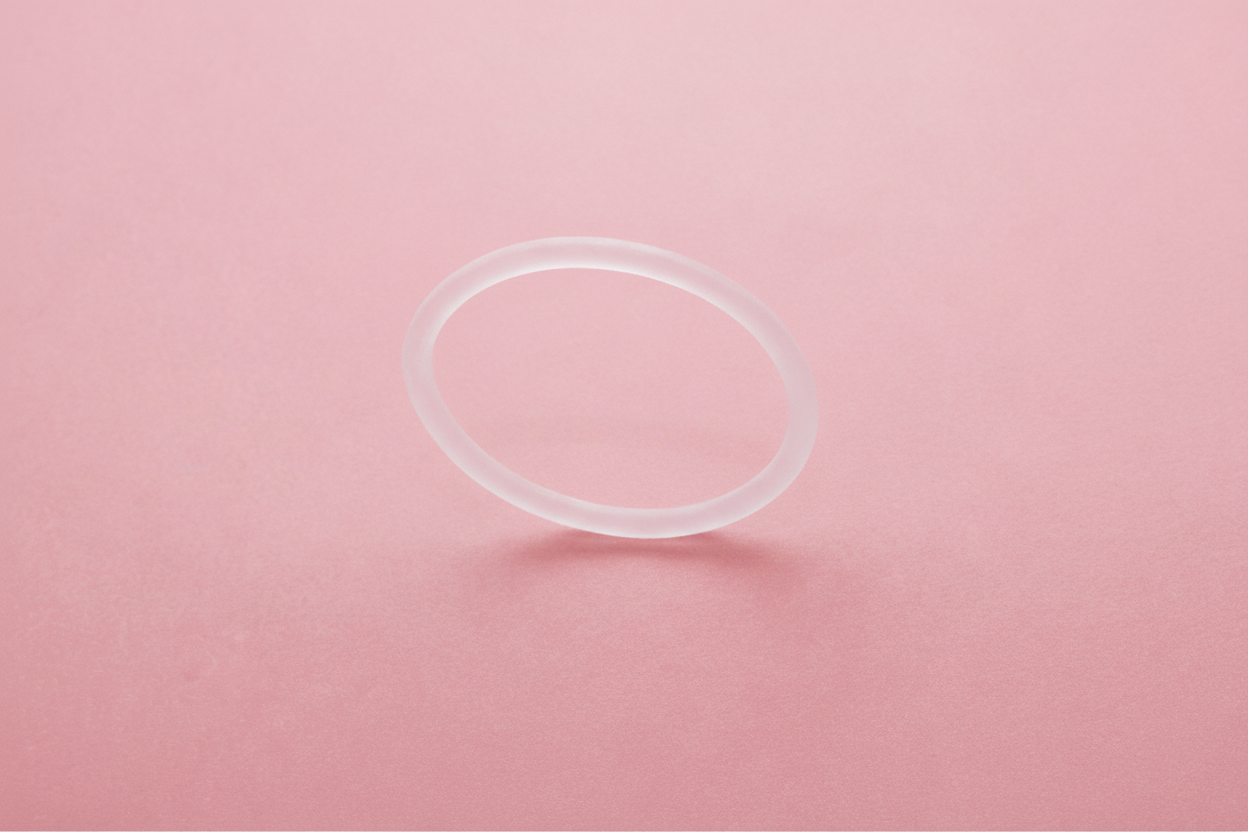
Vaginal ring
The once-a-month, hormone-releasing housemate that curls up inside your vagina.
Gets an B+ in pregnancy prevention.
The cheat Sheet
COMMON BRAND NAMES
NuvaRing (only one available in Australia)
PREVENTING PREGNANCY
93% effective at preventing pregnancy with typical use. 99% effective with perfect use.
STARTING ON THIS METHOD
You’ll need a prescription to get the vaginal ring and depending on where you're at in your cycle when you start, you might need to use backup protection for the first 7 days.
LAST FOR
The NuvaRing lasts for one cycle (4 weeks). If you insert it on the first day of your period, you’re protected immediately. No backup needed. If you insert it any other time: You’ll need to use backup contraception (like condoms) for the first 7 days. After that, the ring is doing its thing and you’re good to go.
HORMONES
Yes, contains synthetic hormones - oestrogen and progestogen
STIS
No protection against STIs
PERIODS
Your period may change; some people have lighter, more regular bleeding, while others may experience spotting or heavier flow, especially at first.
ACNE/SKIN
Can improve and/or worsen your acne/skin
MOOD/EMOTIONS
May help or negatively impact your mood, depending on how your body reacts to the hormones.
PREGNANCY AFTER REMOVAL
You can get pregnant as soon as you stop using the ring. It usually takes 1-2 months for your period to return to the cycle you had before using the ring.
VISIBILITY
The ring sits inside the vagina and usually can’t be seen or felt.
FINANCIAL INVESTMENT
Available by prescription in Australia, and may be partially covered by Medicare.
The vaginal ring is a form of hormonal birth control that is inserted into the vagina to prevent pregnancy. It’s a small, flexible ring that’s about the diameter of the top of a shot glass. You don’t need to place it in a specific position; your vaginal muscles naturally hold it in place (let’s take a moment for how incredible our bodies are!). It doesn’t need to go super deep, just far enough that you don’t notice it’s there. It stays in the vagina for three weeks, followed by a one-week break when the ring is removed and a withdrawal bleed usually occurs.
The vaginal ring works by slowly releasing two synthetic hormones: ethinylestradiol (a form of estrogen) and etonogestrel (a form of progestogen) into the bloodstream through the vaginal wall. Even though the ring sits locally in the vagina, the hormones enter the bloodstream and act systemically, influencing the reproductive system to prevent pregnancy.
These hormones prevent pregnancy in three main ways:
1. Thickens cervical mucus
Imagine the cervix is the entrance to a fancy garden party, and sperm are uninvited guests. Normally, the gate (cervical mucus) is open with a smooth path. But under the influence of progestogen, that path turns into a pit of quicksand; thick, dense, and nearly impossible to cross. Most sperm get stuck before they even make it to the gate. Poor things, the party is popping off!
2. Thins the uterine lining
The uterus usually fluffs up its lining like a cozy bed, getting ready to welcome a fertilised egg. The hormones in the vaginal ring strip the bed and take away the welcome mat, making it much harder for anything to settle in and stay. Because guess what, this hotel has no vacancies!
3. Stops ovulation
Think of your ovaries like a vending machine that releases one egg (snack) each month. The hormones in the vaginal ring switch off the machine, so no egg gets released. No egg means nothing for sperm to fertilise; therefore no pregnancy!
- For the set-it-and-(mostly)-forget-it crew. Perfect if you want dependable birth control without daily admin, but you’re not ready to commit to a 5-year-long uterus lodger.
- Folks who want the freedom to control their cycle (aka skip that monthly bleed).
- For those chasing a few extra perks - doesn’t mess with sex and might soothe PMS-y symptoms.
- In Australia, you’ll need a prescription to get started, and ongoing use requires regular scripts. Normally, in a pack, you’ll get 4 vaginal rings at a time.
- It doesn’t protect against STIs, so consider pairing it with condoms if that’s a concern.
- It doesn't need to be fitted by a doctor, and you can put it in yourself each month.

The not-so-fun stuff
Common side effects
Let’s be honest. No contraceptive method is perfect. And when it comes to hormonal contraception, side effects can feel like a bit of a lucky dip. What one person barely notices, another might really struggle with. Everyone responds differently - physically, emotionally, mentally and every response is valid.
We want you to have the full picture so you can make a decision that works for your body, not just what looks good on paper.
So here it is: the good, the meh, and the stuff worth keeping an eye on.
Most people adjust after 2-3 months of using the vaginal ring, but here are some of the common side effects (affecting around 1 in 100 people) that were reported in the clinical trials of the NuvaRing.
- Headaches or migraines
- Nausea (feeling sick)
- Bloating
- Irregular bleeding or spotting
- Mood changes (including low mood or irritability)
- Breast tenderness or soreness
- Extra vaginal discharge or vaginal irritation
- Yeast infections (like thrush)
- Lower sex drive
- Painful periods
- Acne
- The ring slipping out (most often during sex, pooping, or heavy exercise)
- Weight changes (reported in some users, but research doesn’t show a clear link between the vaginal ring and actual weight gain)
The Lowdown is a contraception review platform where real people share their lived experiences with different birth control methods, including the vaginal ring.
- Mood swings & emotional ups and downs
- Changes to sex drive (up or down)
- Skin changes (some report breakouts)
- Weight fluctuations
- Lighter or irregular periods
- Headaches
- Increased vaginal discharge
- Breast enlargement
- Period like cramps
Less Common But important to know
- Like all combined hormonal contraceptives, the ring slightly increases the risk of venous thromboembolism (blood clots in the legs or lungs).
- The risk of getting a blood clot is very small - we’re talking 1 in 1,000 people who use combined hormonal contraception like the vaginal ring.
- This risk is higher if you smoke, are over 35, have a history of clots, or have certain medical conditions.
- Your best bet is to talk to your doctor if you have a personal or family history of clotting.
Like the combined pill, the vaginal ring contains oestrogen, which means it can raise your blood pressure, especially if it’s already on the higher side.
It may also slightly increase your risk of stroke or heart attack, mainly if you:
- Smoke (especially if you’re over 35)
- Get migraines with aura
- Have health conditions like high cholesterol or diabetes
- Are living in a larger body with other risk factors
If any of this sounds familiar, your doctor might recommend a method without oestrogen, like the mini pill, hormonal IUD, or copper IUD.
Like the combined oral pill, the vaginal ring contains oestrogen and progestogen, so it carries similar potential impacts on cancer risk.
Breast cancer:
- Studies show a slight increase in breast cancer risk while using combined hormonal contraception, including the vaginal ring.
- This increased risk disappears within about 10 years of stopping use.
- The risk of developing breast cancer due to the vaginal ring or pill in people aged under 35 is 1 in 50,000
Cervical cancer:
- There’s a small increase in cervical cancer risk with long-term use (5–10 years).
- Risk returns to baseline after stopping.
Protective effects
Studies show that people who use high-dose hormonal contraception (like older versions of the pill) have a reduced risk of ovarian and endometrial (uterine) cancer, and possibly benign breast disease. While it’s not yet confirmed, the vaginal ring may provide similar protective benefits but more research is needed.
Hormonal contraception is not a one-size-fits-all so when it comes to how your mood will be affected by synthetic hormones, it's a bit of a trial and error. If you’ve ever felt like your mental health is connected to your hormones, you’re not imagining it.
Some people using the implant report mood swings, low mood, or anxiety. Others feel no change at all, or even more emotionally steady than before. The research is mixed, but a growing number of studies suggest that people with a history of things like depression, anxiety, or PMDD may be more sensitive to hormonal shifts.
If you notice changes in your mood after starting the vaginal ring, whether that’s a subtle shift or something more significant, it’s worth tracking and bringing up with a healthcare provider. You are the expert on your body, and you deserve care that takes mental health seriously.
You’re not overreacting. You’re paying attention. And that matters. Go you good human!
Toxic shock syndrome (TSS) is a very rare condition linked to certain bacteria that can enter the body and, in rare cases, cause illness. It’s been reported occasionally in people using the vaginal ring, mostly when it’s been left in longer than recommended. We’re talking when left in for several weeks to months beyond the recommended time.
Bottom line: using the ring as directed (changing it on time, not leaving it in too long) helps keep this already low risk even lower.
If you ever feel unwell while using the ring, like getting flu-like symptoms, a rash, or feeling dizzy, it’s okay to check in with your doctor or healthcare provider. It doesn’t necessarily mean something serious is happening, but it’s always worth getting support if something feels off.
How to insert the vaginal ring
If you’ve ever wrangled a tampon or popped in a menstrual cup, you’re already halfway to ring pro. Even if you haven’t, don’t stress, we’ve got you. There’s no magic position or perfect placement. Just slide it in far enough that it feels comfy.
1. Wash your hands
Warm, soapy water. This is not the time to whip out the hand sanitiser and call it a day.
If it were, it would be...queue song “burn baby burn”. That classic 70s song by Rosvelt ha! You'll know it when you hear it.
2. get comfy
Lunge like you’re stretching for Pilates. Lie down like it’s bedtime. Squat like you're picking up a hair lacky. Whatever works.
There’s no gold medal for technique here, just aim for the ultimate comfort position.
3. Squeeze the ring
Pinch the sides together so it’s more oval than doughnut-shaped.
4. Gently insert it
Slide it into your vagina like you would a tampon, angle it slightly toward your lower back.
No need to jam it in like a USB on the wrong side (throwback to when they were a thing!), once it’s in and you can’t feel it, that’s the sweet spot.
5. Give it a lil check
You can do a little feel-around if that gives you peace of mind. If you forget it’s even in there, then you’ve done it perfectly.
6. What now?
Typically, you would leave it in for 3 weeks straight, no breaks.
After 3 weeks, take it out and go ring-free for 7 days (this is when your ‘bleed’ usually shows up).
Then, after 7 days insert a new vaginal ring.
Just a cute reminder
Leave it in for everything. Sex, swimming, working out, bathing, Netflix marathons - the ring stays in. There’s no reason to take it out, unless it’s time for your scheduled 7-day break.
Maximise your ring power
Here’s the lowdown on how to keep your ring doing its thing.
Stick to the schedule
Stick to the schedule
Don’t leave your ring in for longer than the recommended time (usually 3 weeks in, 1 week out, unless you're skipping your ring-free week.

Keep an eye on it making a surprise exit
If your ring falls out or is removed for more than 3 hours (NuvaRing), it may not provide full protection. Rinse it, pop it back in, and when in doubt use a back-up contraceptive method, like condoms.
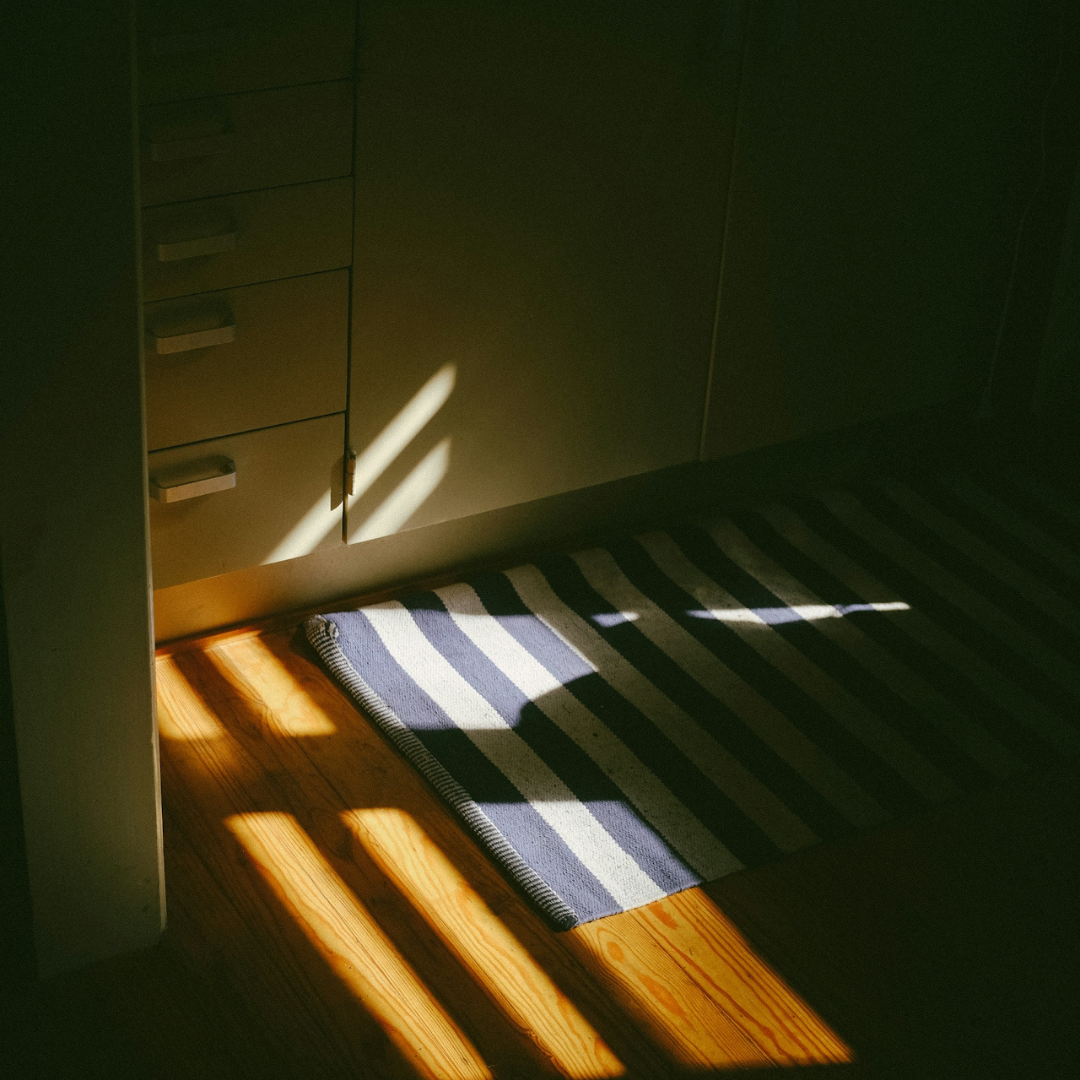
Look after your new bestie
Keep unopened rings in a cool, dark place (kinda like mushrooms?) Heat and direct light can mess with the hormones before you even use them. Not ideal!
Lube it up!
Go for a water-based lube. Avoid oil-based or silicone-based lubricants with the ring. These don’t play nice with your vaginal ring.
How to remove the vaginal ring
Taking out the vaginal ring is even easier than putting it in.
1. Wash your hands
Yes, again. You know the drill, warm water, soap.
2. get comfy
Same as insertion: one leg up, lying down, squatting, interpretive dance, whatever gets you there.
3. Hook a finger
Slide a clean finger into your vagina and gently hook the front rim of the ring.
4. Ease it out
Give it a little tug and your hormonal hula hoop should come out.
5. What now?
If you’re at the end of your cycle: toss the ring in the bin (not the toilet). It’s time for your ring-free week where you’ll most experience a withdrawal bleed during this time, although it may be lighter, later or even not come at all. This is normal!
If you are still bleeding and the 7 days have passed and you’re putting in your new ring, you can still use tampons or a menstrual cup while the ring is in. Just be gentle when removing them so you don’t accidentally tug the ring out.
If you want to skip your bleed, you can also pop a new ring in straight away. This is safe for most people, but check with your doctor if you’re unsure.

Switching to the vaginal ring
From the pill
You’re covered immediately. Insert the ring on the same day you’d usually start your next pack and you’re good to go. No backup needed.
From a progestogen-only method
This includes the mini pill, implant, injection, or hormonal IUD. You’ll need to use backup contraception (like condoms) for the first 7 days after inserting the ring. Check with your doctor to make sure you're switching at the right time.
From the copper IUD
You’ll need to start the ring before or on the same day the IUD is removed to be protected straight away. If there’s a gap, use backup contraception for 7 days.
From non-hormonal methods
If you’re switching from condoms, withdrawal, a diaphragm, or no method at all, the ring won’t protect you immediately. You’ll need to use backup for 7 days after inserting it.
Your hormones explained
Localised vs non-localised hormones
Methods like hormonal IUDs and the vaginal ring
- These are designed to release hormones directly to the uterus or cervix, with the goal of staying “local.”
- Ovulation may or may not be suppressed, depending on the method and you as a human!
- They’re often described as “low impact” but there’s some grey area to that.
Methods like the combined pill, injection and implant
- Hormones are delivered into your bloodstream and circulate throughout your entire body.
- That means they can influence your brain, breasts, skin, bones, libido, mood, appetite…pretty much everything.
- Ovulation is usually fully suppressed.
- There’s a strong potential for both physical and psychological effects, because these hormones touch every system.
Even local methods like the hormonal IUD aren’t truly local. A portion of those hormones still enter your bloodstream. And once they’re in? They’re catching an Uber straight to your central nervous system, aka your brain, which is basically a hormone sponge.
Your brain has estrogen and progesterone receptors scattered throughout:
- Amygdala (emotion)
- Hippocampus (memory)
- Prefrontal cortex (decision-making, motivation)
- Hypothalamus (hormone regulation)
- Brainstem (autonomic nervous system)
That’s a lot of big words but in other words, your brain is not just along for the ride, it’s driving the car.
If you’ve ever said:
- “I don’t feel like myself on birth control.”
- “The IUD was meant to be low-impact, but I still felt off.”
- “It helped my skin but wrecked my libido.”
- “I feel calm, but numb.”
You’re not imagining it. You’re experiencing the full-body, full-mind reality of synthetic hormones - even from methods that are “local”.
No matter how the hormones are absorbed, through your uterus, your skin, your gut, or a tiny implant in your arm, synthetic hormones affect all of you. That doesn’t make them bad. It just makes them pretty powerful.
Knowing how they work gives you the info you need to figure out what’s right for you!
Monthly Bleeds on hormonal contraception
You know when you start taking the sugar pills for 7 (or 4 days) during your pill packet? Or take out the ring for 7 days? That bleed you get? It’s actually not a real period. It’s called a withdrawal bleed (aka a fake period).
It happens when you take a break from the hormones and your hormone levels drop from the usual flatline of consistency.
That dip tells your body, “cool, i’ll shed the uterine lining now”. But it’s not triggered by ovulation, because you didn’t ovulate in the first place.
Fun fact: the monthly bleed was originally added to make the pill seem more “natural” when it launched in the 1960s. It reassured users (and their doctors) that their bodies were still working "as usual." Biologically, you don’t need to bleed every month on hormonal contraception unless you want to.
Yep! Most people can safely skip their withdrawal bleed by:
- Skipping the sugar pills (pills that literally do nothing) and starting your next pack right away
- Swapping out your ring without a break
- Using extended or continuous hormonal contraception
There’s no medical reason you have to bleed every month while using hormonal contraception, unless you like the routine, or it helps you remember what day you are up to on the pill packet. If you do skip the withdrawal bleed and there’s some spotting, this is normal! This is just your body adjusting to the hormones. It should go away after about 6 months.
Late removing or inserting your ring?
Life gets busy, brains get full and sometimes your ring schedule goes a little off script. Whether you forgot to take it out, pop a new one in, or just lost track of the weeks, here’s what to do next.
I forgot to take it out after 3 weeks
No big deal, if it’s been in for less than 4 weeks total, you’re still protected. Phew!
Just take it out when you remember, have your usual 1-week break, then pop in a new ring like normal. Easy peasy.
If it’s been more than 4 weeks, things get a bit fuzzier. You might not be protected.
Here’s what to do:
- Take the ring out
- Put a new one in straight away
- Use backup contraception (like condoms) for the next 7 days
- If you’ve had unprotected sex during that time, you might want to consider taking emergency contraception. Check in with your doctor or pharmacist.
Hot tip: Life happens and it’s easy to forget to take out the ring. Honestly, we’re just trying to remember to wash our hair and put on clean undies each day, let alone think about this once a month. To make it easier to remember, set a reminder on your phone for a specific date each month or use an app to stay on track.
I forgot to put a new ring in after my ring-free week
If your break lasts longer than 7 days, the ring may no longer protect you.
Here’s what to do:
- Pop in a new ring as soon as you remember
- Use backup contraception for the next 7 days
- If you’ve had unprotected sex during that time, emergency contraception might be worth considering. Check in with your doctor or pharmacist.
Hot tip: Life happens, and it’s easy to forget to take out the ring. Honestly, we’re just trying to remember to wash our hair and put on clean undies every day, let alone think about this once a month. To make it easier to remember, set a reminder on your phone for a specific date each month or use an app to stay on track.
Troubleshooting: The vaginal ring
Short answer: probably yes.
If the ring has been out for less than 3 hours, you’re still protected. Just rinse it with cool or lukewarm water (not hot!) and pop it back in.
If it’s been out for more than 3 hours during the “ring-in” weeks, you might not be covered. You’ll need to:
- Reinsert it ASAP
- Use a backup method (like condoms) for the next 7 days
Hot tip: Set a calendar reminder to check placement now and then, especially after sex, pooping, or exercising.
Not bad, but not ideal. Leaving the ring in for longer than 4 weeks can reduce effectiveness. You might not be protected against pregnancy.
Here’s what to do:
- Remove it as soon as you rememeber
- Insert a new one
- Use backup contraception for 7 days
- Consider emergency contraception if you've had unprotected sex recently (within the last 5 days)
And don’t stress, it happens! At least you are doing something about it now.
Nope. Not bad at all.
Skipping the ring-free week (aka using it back-to-back) is safe, approved by medical guidelines, and often preferred by people who want to avoid monthly bleeds and the shenanigans that come along with it. There’s no medical reason you have to bleed every month on hormonal contraception. If you prefer to, great. If not, that’s great too.
Not necessarily. Even though hormonal methods all affect your body systemically (to some extent), each method delivers different hormones, doses, and routes of absorption, which means they can feel very different.
If the ring made you feel moody, flat, nauseous, or just not like yourself, it doesn’t mean:
- You imagined it
- You failed
- Or that all hormonal contraceptives will feel the same
There are heaps of options, including:
- Lower-dose pills
- Progestin-only methods (like the mini-pill or hormonal IUD)
- Non-hormonal options (like copper IUDs or condoms)
There’s a bit of trial and error involved in finding a contraception that works for you. Trust how you feel, and don’t be afraid to try something else.
Sometimes, yes but most of the time, no.
Some partners say they can feel it (usually as a soft bump), but it’s usually not painful or a mood-killer. Others don’t notice it at all. If it’s a problem, you can take it out for up to 3 hours during sex and reinsert it afterwards, just don’t forget to pop it back in. If you leave it out for more than 3 hours, you might need a backup contraception.
Nope. The actual ring itself can’t travel to your uterus, ovaries, or brain (even though it feels like that during a panic spiral).
Your vagina ends at the cervix, and the ring can’t pass through it.
If it’s tricky to reach, try a different position. If you still can’t find it, call upon your doctor to help you. They’ve got you!
Where this info comes from
This page was created using guidance from trusted Australian and international health organisations, clinical guidelines, and peer-reviewed research. These sources support the medical accuracy, accessibility, and lived experience approach behind this content.
- Family Planning NSW - Vaginal Ring (NuvaRing)
- Healthdirect Australia - Contraceptive vaginal ring
- Better Health Channel - Contraception - vaginal ring
- Sexual Health Victoria - Vaginal Ring
- SHINE SA – Contraceptive Vaginal Ring
- MSI Australia – Contraception
- Body Talk – Vaginal Ring
- NPS Medicine Wise - NuvaRing
- FSRH (Faculty of Sexual and Reproductive Healthcare, UK) - The Vaginal Ring
- WHO – Medical Eligibility Criteria for Contraceptive Use, 5th edition
- NHS UK - Vaginal Ring
- Brook - Contraceptive Ring: The Vaginal Ring
- Planned Parenthood - Birth Control Ring
- WebMD - Vaginal Ring
- FDA NuvaRing Label
- NuvaRing – Risks & Side Effects
- Alvergne, A., & Lummaa, V. (2010). Does the contraceptive pill alter mate choice in humans? Trends in Ecology & Evolution, 25(3), 171–179. DOI: 10.1016/j.tree.2009.08.003.
- Brønnick, M. K., Ottowitz, W. E., Pfeifer, G., & Pletzer, B. (2020). Systematic review of neuroimaging studies on hormonal contraceptives. Frontiers in Psychology, 11, 1560. DOI: 10.3389/fpsyg.2020.556577
- Lauring, J. R., Lehman, E. B., Deimling, T. A., Legro, R. S., & Chuang, C. H. (2016). Combined hormonal contraception use in reproductive-age women with contraindications to estrogen use. American Journal of Obstetrics and Gynecology, 215(3), 330.e1–330.e7. https://doi.org/10.1016/j.ajog.2016.03.047
- Mengelkoch, S., Hill, S. E., & Gildersleeve, K. A. (2024). Hormonal contraceptive use and emotional experience: A pre-registered longitudinal analysis. Emotion. DOI: 10.1037/emo0001271
- Pletzer, B., & Kerschbaum, H. H. (2014). 50 years of hormonal contraception—Time to find out what it does to our brain. Frontiers in Neuroscience, 8, 256. DOI: 10.3389/fnins.2014.00256
- Skovlund, C. W., Morch, L. S., Skovlund, C. W., et al. (2016). Association of hormonal contraception with depression. JAMA Psychiatry, 73(11), 1154–1162. https://jamanetwork.com/journals/jamapsychiatry/fullarticle/2552796
- World Health Organization, International Agency for Research on Cancer. (2007). Combined estrogen–progestogen contraceptives and combined estrogen–progestogen menopausal therapy (IARC Monographs on the Evaluation of Carcinogenic Risks to Humans, Vol. 91). https://publications.iarc.fr/Book-And-Report-Series/Iarc-Monographs-On-The-Identification-Of-Carcinogenic-Hazards-To-Humans/Combined-Estrogen--Progestogen-Contraceptives-And-Combined-Estrogen-Progestogen-Menopausal-Therapy-2007
- Otten, C. (2021). The sex ed you never had. Allen & Unwin.
- Hill, S. E. (2019). This is your brain on birth control: The surprising science of women, hormones, and the law of unintended consequences. Avery.