
Condoms
As-you-need-it OG pregnancy prevention, STI protection with a no-strings-attached attitude.
Gets an C+ in pregnancy prevention.
The cheat Sheet
COMMON BRAND NAMES
Rubber, sheath
PREVENTING PREGNANCY
External condoms - 98% effective if used perfectly. 87% effective with typical use. Internal condoms - 95% effective if used perfectly. 79% effective with typical use.
STARTING ON THIS METHOD
Can get them for free from sexual health services and some GPs or buy them from pharmacies, grocery stores, vending machines or online. Immediate protection once placed over the penis or inserted into the vagina.
LAST FOR
Single use, use a new one each time you have vaginal, anal and/or oral sex.
HORMONES
No synthetic hormones
STIS
Protects against STIs
PERIODS
No effect to periods
ACNE/SKIN
No effect to acne/skin
MOOD/EMOTIONS
No effect to mood/emotions
PREGNANCY AFTER REMOVAL
It is possible to get pregnant immediately after removing the condom.
VISIBILITY
Visible to people involved in the sexual activity.
FINANCIAL INVESTMENT
On-going cost per single use.
Condoms are a barrier method of contraception that physically block sperm and other body fluids (blood, semen or vaginal fluids) from entering the vagina, anus or mouth. They’re a Jack of all trades - prevent pregnancy and also protect against sexually transmitted infections (STIs) like chlamydia, gonorrhea, and HIV by preventing direct skin-to-skin and fluid contact. Condoms are single-use only (aka one condom per steamy, hot session).
There are two main types:
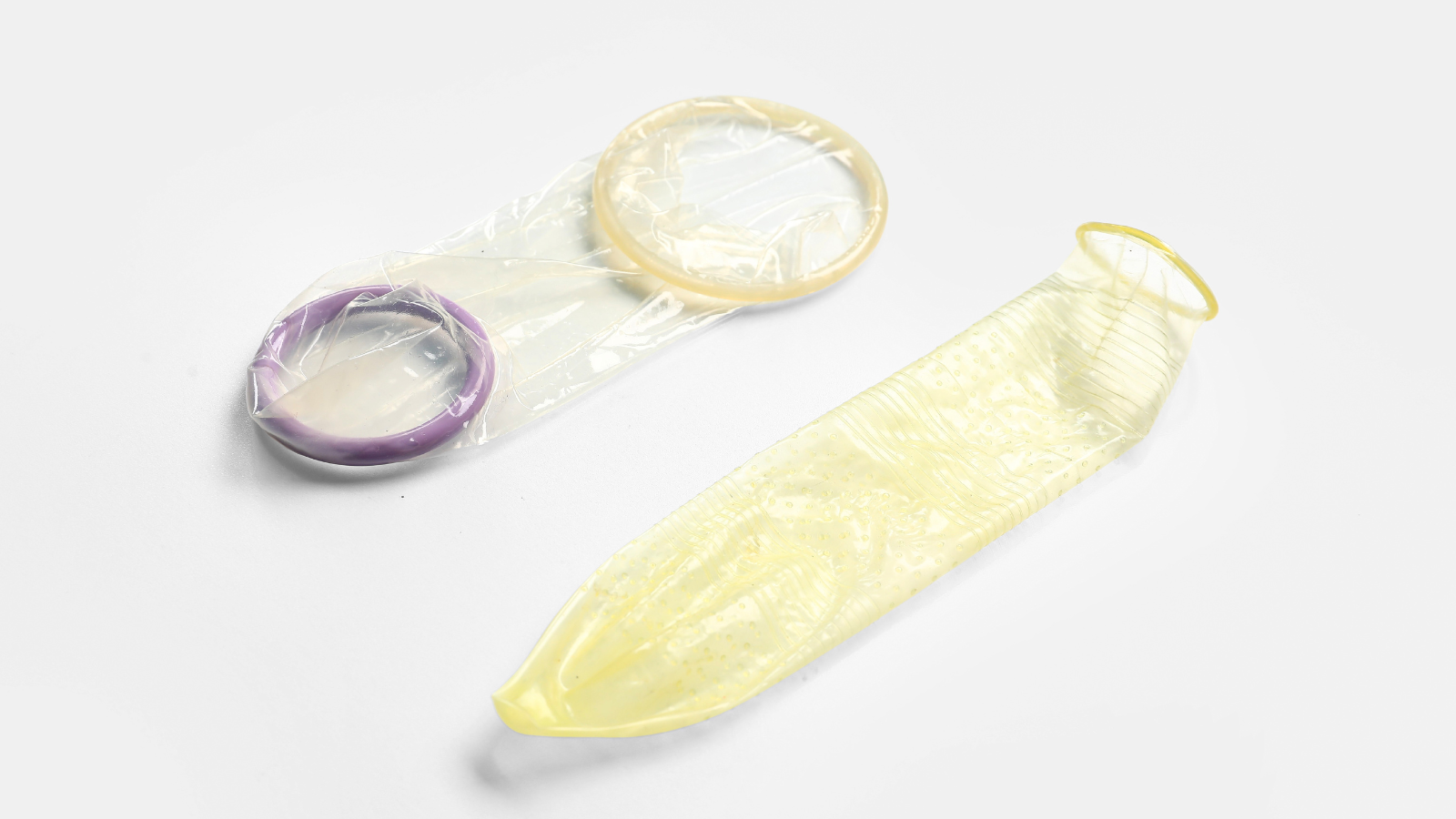
External condoms are the most common type. They’re worn over an erect penis or sex toys and are usually made from thin (and ridiculously strong) latex, polyurethane or polyisoprene (if you have a latex allergy).
Internal condoms are soft, flexible pouches made from nitrile or polyurethane. You insert it into the vagina or anus before sex. There’s two rings - the inner ring sits inside to help keep the condom in place and the outer ring stays just outside the vaginal or anal opening, acting as an anchor. To give you a visual, It’s kind of like throwing down a dropsheet before you’re about to paint the house.
- The casual relo type that only wants protection if and when they have sex
- The hormone-free folks that would rather skip the synthetic stuff
- Anyone who loves a two-for-one deal: pregnancy prevention and STI protection
- Can buy from your local supermarket, pharmacy and EVEN the petrol station (did somebody say convenience?!)
- No serious side effects (pheww)
- Besties with all the other methods (e.g. the pill, implant, injection, IUD) so you are doubley protected if you choose to use these too.

The not-so-fun stuff
The Condoms flaws
Condoms. Saviours of spontaneity! Protectors of precious bits! And yet…they get a bit of a bad name for being “unreliable.”
The truth is when used perfectly (like, Olympic-level technique), they’re 98% effective at preventing pregnancy.
BUT. IRL when it’s dark, you’re flustered, someone’s got fake nails, the packet’s being attacked like a packet of salt and vinegar chips, and foreplay is well under way, that number drops to about 87%, which is still pretty effective, but when it stands next to the IUDs and pills of the world, there’s some hesitation.
- You tear the condom - fingernails, rings, teeth are all not condoms friends.
- You grab the wrong size - too big and it might slip off, too small and it could tear.
- You don’t leave space at the tip.
- It’s been in your wallet since 2018 - heat and a long period of time results in a condom that’s seen better days.
- You’re in such a hurry that you forget to actually put one on (then it really isn’t effective).
And if it breaks, slips off, or disappears into the void? That’s a sign the contraceptive moment has…flopped. In that case, it’s a good idea to consider emergency contraception, just in case.
The good news is that all of this is fixable. With a little prep and a quick quality check, condoms can be a reliable, no-hormone, low-commitment MVP.
How to put a condom on
We reckon you can nail this in 30 seconds flat, which, when you think about it, is less time than it takes to find a good song on Spotify. Let’s rewrite that script of it being a total mood killer. In fact, putting a condom on can be part of the foreplay. Let your partner(s) do the honours. Add some sensual eye contact. Maybe a bit of tongue. Sexy and safe? Woah, shut the front door!
External condom (goes over a penis)
Prep work:
- Open the packet carefully people – No teeth, scissors, or dramatic ripping - I know you’re excited but take your time with this!
- Pinch the tip - This removes air so there's room for the arriving guests (semen).
- Pop the “hat” on top of the head of the penis (it should literally look like it's wearing a hat)
- Roll the condom down the shaft of the erect penis, so that the rubber ring is at the base of the shaft.
Post steamy session
- After use, hold the base of the penis - pull the condom up the shaft, while holding the rubber ring to prevent spillage (your bestie, the condom has done all this good work, let’s not lose it now!).
- Dispose responsibly - Tie it up to contain all the semen, wrap it in tissue and bin it.
Internal condom (goes inside a vagina)
Prep work:
- Open the packet carefully people – No teeth, scissors, or dramatic ripping - I know you’re excited but take your time with this!
- Find the two rings:
- The inner ring (smaller, closed end) helps with insertion.
- The outer ring (larger, open end) stays outside the body.
- Get comfy - squat, lie down, stand with one foot up - whatever works for you.
- Pinch the inner ring so it becomes narrow.
- Insert it deep into the vagina, like a tampon. Use a finger to push it up as far as it’ll go.
- Check the outer ring - it should rest outside the vagina, covering the vulva (the external part).
During
- Now, you’re good to go!
- Guide the penis/toy into the condom opening to avoid slipping between the condom and the walls of the vagina (think a plane coming into land). It’s normal for the condom to move a little, but it should stay in place.
Post steamy session
Twist the outer ring to trap fluids inside. Gently pull it out and throw it in the bin (not the toilet!).
condom yay's and nay's
- Feel free to use lube (water-based is preferable with latex condoms). This helps reduce breakage and makes it a fun slip and slide for everyone involved.
- Check the expiry date. TBH, unless you are using a packet of condoms that your parents are passing down to you as a family heirloom, the condom is likely not expired, but just to be safe, check it!
- Use a new condom if switching between anal sex and vaginal sex.
- Open the condom packet like it’s the delicate petals of a flower.
- Although very convenient, avoid keeping your condoms in your wallet or the car. Condoms don’t like heat or sunshine (the opposite of your fiddle leaf plant).
- Save the oil for a massage during foreplay. Oil-based products (eg Vaseline, hand cream or oil-based lube) don't play nicely with latex condoms as it can make them less effective.
- Grab a new condom if you’ve already tried putting it on the wrong way. I know it feels like a waste of a good condom, but it may have touched some pre-cum, or semen, which could mean there is a risk of pregnancy and STIs.
- One condom at a time is all the protection you need. Two condoms (ie, an external AND internal condom or two external condoms on the shaft of the penis) doesn't mean double the protection.
I’ll let you in on a secret, when I first started having sex as a spring chicken, my high school boyfriend and I used two condoms every single time we had sex because we thought it was more effective in preventing pregnancy. We didn’t know that this actually made the condoms LESS effective!
Condom
Cumbacks for all
The condom broke, what do I do now?
We understand if you are stressed af! We’ve all been there. The panic, the dread, the what if…
However, you’ve got options, and the next steps depend on whether you’re worried about pregnancy, STIs or both.
Emergency contraception (also known as “the morning after pill”) will be your best friend right now.
- Take this ASAP.
- It’s most effective within 24 hours of unprotected sex, but effective for up to 3-5 days.
Hot tip: you can pick emergency contraception up from the pharmacy without a prescription from your doctor!
Copper IUD
- If you want ultra-reliable backup, a doctor can insert a copper IUD within 5 days of unprotected sex - this prevents pregnancy 99.9% of the time.
- However, really think about whether you want to keep the copper IUD in long term. This isn’t the kind of contraception you can just whip in and whip out willy-nilly.
Get tested
Some STIs don’t show up straight away, so you may need to wait a week or more after exposure for accurate results. Symptoms (like burning when you pee, itching, unusual discharge or funky smells) might pop up… or not. Many people have no symptoms at all, which is why testing is key.
Figure out where you can go to get tested
You can get tested through your GP or a sexual health clinic. Some family planning clinics, youth centres, women’s health clinics, and Aboriginal Community Controlled Health Services also offer STI testing, often for free or low cost (amazing!).
Worried about HIV?
If you’ve had a condom break or unprotected sex with someone who is HIV positive or whose status you don’t know, you may be eligible for PEP (post-exposure prophylaxis). It can prevent HIV if taken within 72 hours, the sooner, the better with that one.
Hot tip: PEP isn’t available over the counter, you’ll need a script from a GP, hospital emergency department, or sexual health clinic.
How to buy condoms without your brain melting into a puddle of awkward
The idea of standing in a supermarket aisle, clutching a box of condoms like it’s a glowing neon sign that says “I PLAN TO HAVE SEX”, can feel a tad…exposing.
But here’s the thing: buying condoms is not weird. It’s smart. It’s responsible. And frankly, it’s way sexier than the alternative (aka the surprise edition of parenthood or an STI that definitely wasn’t on your vision board).
So on that note, let’s get you through this with minimal cringe.
1. Remember: no one cares
The checkout person? Seen it all. The other shoppers? Thinking about what’s for dinner. You are not the main character in their story. So grab those condoms with the same energy as if you were buying a loaf of bread.
2. Self-checkout = Real MVP
Ah, the sweet, judgment-free embrace of a self-serve checkout. No eye contact, no awkward conversation, just you, a robot, and your dignity intact.
3. The diversion tactic
If buying condoms solo feels too obvious, do what we call the “weekly essentials” move. Toss in some toothpaste, some eggs, maybe a banana for comedic effect (optional). Suddenly, it’s just a totally normal, nonchalant grocery run…nothing to see here folks!
4. Channel your inner boss
Walk in, grab the condoms, and own it. No hesitation. No shifty eyes. Picture yourself as a confident, sex-positive legend who is prepared and unbothered. Because that’s exactly what you are.
5. Order online like a modern human
If the supermarket mission still feels too daunting, skip it. Life is stressful enough, you don’t need to add to it! Get them delivered to your door like the VIP you are. The internet exists for a reason, and that reason is discreet condom shopping.
6. Remember the real embarrassment: not having one when you need it
Picture this: You’re in the moment. Things are heating up. Clothes are coming off…and…you’ve got nothing. Now that is awkward. Buying condoms in advance? That’s just called being a prepared legend.
So, go forth and buy those condoms like the self-assured, sexually responsible icon that you are. You’ve got this!
Where this info comes from
This page was created using guidance from trusted Australian and international health organisations, clinical guidelines, and peer-reviewed research. These sources support the medical accuracy, accessibility, and lived experience approach behind this content.
- BetterHealth Channel - external condoms & Latex allergy
- Family Planning NSW - Male (external) condom
- Family Planning NSW - Female (internal) condom
- Healthdirect Australia - Condoms
- Better Health Channel - Male (external) condoms
- Sexual Health Victoria - External condom
- Sexual Health Victoria - Internal condom
- SHINE SA – Condoms
- MSI Australia – Condoms
- Body Talk – External (male) condom
- Body Talk - Internal (female) condom
- Play Safe - how to talk about condoms
- Family Planning Tasmania - How to have the ‘condom chat’
- Jean Hailes for Women’s Health - How to have ‘the talk’ with your new partner
- Queensland Government - Wrap it up right: a guide to using condoms
- Otten, C. (2021). The sex ed you never had. Allen & Unwin.